Kind: Terminator

Class: Field

Type: Environment

Roadway Environment

Overview

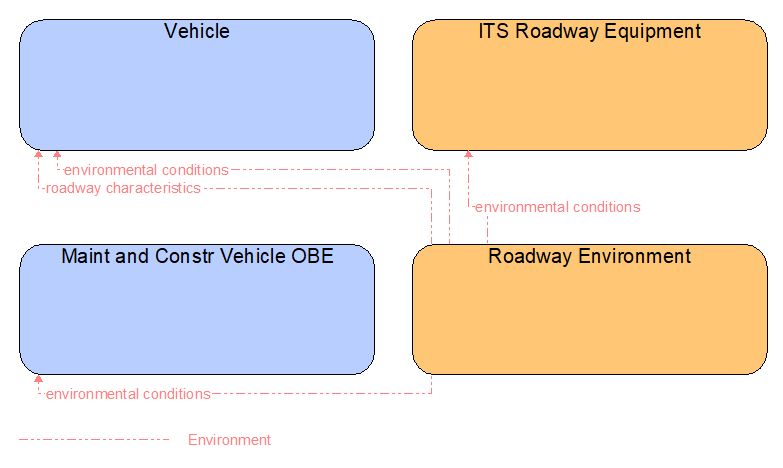
'Roadway Environment' represents the physical condition and geometry of the road surface, markings, signs, and other objects on or near the road surface. It also represents the environmental conditions immediately surrounding the roadway. The roadway environment must be sensed and interpreted to support automated vehicle services. Surrounding conditions may include fog, ice, snow, rain, wind, etc. which will influence the way in which a vehicle can be safely operated on the roadway. The roadway environment must be monitored to enable corrective action and information dissemination regarding roadway conditions which may adversely affect travel. Infrastructure owner/operators can improve the roadway environment to improve the performance and accuracy of vehicle-based sensors that must sense and interpret this environment. Improvements could include changes in the shape, size, design, and materials used in signs, pavement markings, and other road features.

This physical object does not have any functionality defined in ARC-IT, as it exists outside the system functional boundary.


This physical object is included in the following Service Packages:

Security

This physical object has the following security levels for the associated service packages.

Physical Object Security
Security Class Confidentiality Integrity Availability Service Package
Class 1 Not Applicable Low Low CF10: Road Weather Information for Freight Carriers
Class 1 Not Applicable Low Low CF10.1: WAW Environmental Data Collection Implementation
Class 1 Not Applicable Low Low CF10.2: C-ITS Environmental Data Collection Implementation
Class 1 Not Applicable Low Low PM07: Automated Parking
Class 1 Not Applicable Low Low PT18: Low Speed Automated Driving for Predefined Routes
Class 1 Not Applicable Low Low ST02: Eco-Traffic Signal Timing
Class 1 Not Applicable Low Low ST02.1: Infrastructure-Based Monitoring Implementation
Class 1 Not Applicable Low Low ST02.2: Wide Area Wireless Implementation
Class 1 Not Applicable Low Low ST02.3: C-ITS Communications Implementation
Class 1 Not Applicable Low Low ST03: Eco-Traffic Metering
Class 1 Not Applicable Low Low ST03.1: Infrastructure Sensor Based Implementation
Class 1 Not Applicable Low Low ST03.2: Wide Area Wireless Implementation
Class 1 Not Applicable Low Low ST03.3: C-ITS Communications Implementation
Class 1 Not Applicable Low Low TM20: Variable Speed Limits
Class 1 Not Applicable Low Low TM20.1: Variable Speed Limits Implementation
Class 1 Not Applicable Low Low VS01: Autonomous Vehicle Safety Systems
Class 1 Not Applicable Low Low VS01.1: Autonomous Vehicle Safety Systems Implementation
Class 1 Not Applicable Low Low VS02: V2V Basic Safety
Class 1 Not Applicable Low Low VS02.1: V2V Basic Safety Implementation
Class 1 Not Applicable Low Low VS03: Situational Awareness
Class 1 Not Applicable Low Low VS03.1: V2V Communications Only Implementation
Class 1 Not Applicable Low Low VS03.2: Infrastructure Supported Implementation
Class 1 Not Applicable Low Low VS05: Curve Speed Warning
Class 1 Not Applicable Low Low VS05.1: Traditional Roadside Speed Warning Implementation
Class 1 Not Applicable Low Low VS05.2: Wide Area Wireless Communications Implementation
Class 1 Not Applicable Low Low VS05.3: C-ITS Communications Implementation
Class 1 Not Applicable Low Low VS06: Stop Sign Gap Assist
Class 1 Not Applicable Low Low VS06.1: Stop Sign Gap Assist Implementation
Class 1 Not Applicable Low Low VS07: Road Weather Motorist Alert and Warning
Class 1 Not Applicable Low Low VS07.1: Wide Area Wireless Communications Implementation
Class 1 Not Applicable Low Low VS07.2: C-ITS Communications Implementation
Class 1 Not Applicable Low Low VS08: Queue Warning
Class 1 Not Applicable Low Low VS08.1: Traditional ITS Queue Warning Implementation
Class 1 Not Applicable Low Low VS08.2: WAW Queue Warning Implementation
Class 1 Not Applicable Low Low VS08.3: C-ITS Queue Warning Implementation
Class 1 Not Applicable Low Low VS13: Intersection Safety Warning and Collision Avoidance
Class 1 Not Applicable Low Low VS13.1: Wide Area Wireless Communications Implementation
Class 1 Not Applicable Low Low VS13.2: C-ITS Communications Implementation
Class 1 Not Applicable Low Low VS14: Cooperative Adaptive Cruise Control
Class 1 Not Applicable Low Low VS14.1: Adaptive Cruise Control Implementation
Class 1 Not Applicable Low Low VS14.2: Cooperative Adaptive Cruise Control Implementation
Class 1 Not Applicable Low Low VS15: Infrastructure Enhanced Cooperative Adaptive Cruise Control
Class 1 Not Applicable Low Low VS15.1: Wide Area Wireless Communications Implementation
Class 1 Not Applicable Low Low VS15.2: C-ITS Communications Implementation
Class 1 Not Applicable Low Low VS17: Automated Vehicle Operations
Class 1 Not Applicable Low Low VS17.1: Wide Area Wireless Communications Implementation
Class 1 Not Applicable Low Low VS17.2: C-ITS Communications Implementation
Class 1 Not Applicable Low Low VS18: Vehicle Remote Operations
Class 1 Not Applicable Low Low WX01: Weather Data Collection
Class 1 Not Applicable Low Low WX01.1: Environmental Sensor Stations Implementation
Class 1 Not Applicable Low Low WX01.2: Maint and Constr Vehicle Reported Implementation
Class 1 Not Applicable Low Low WX01.3: C-ITS Vehicle Reported Implementation
Class 1 Not Applicable Low Low WX03: Spot Weather Impact Warning
Class 1 Not Applicable Low Low WX03.1: Wide Area Wireless Communications Implementation
Class 1 Not Applicable Low Low WX03.2: C-ITS Communications Implementation
Class 1 Not Applicable Low Low WX04: Roadway Micro-Prediction
Class 1 Not Applicable Low Low WX04.1: Roadway Micro-Prediction Implementation


Interfaces Diagram

Interfaces diagram

Standards

Currently, there are no standards associated with the physical object itself though the interfaces may have standards associated with them. For standards related to interfaces, see the specific information flow triple pages.